todaymanas@gmail.com
Highlighting the growing impact of geopolitical disruptions, climate variability, and global supply chain uncertainties on agriculture, Federation of Seed Industry of India (FSII) called for stronger national focus on preserving and strengthening India’s agricultural biodiversity, describing seed diversity and resilient crop genetics as critical strategic assets for ensuring long-term food security, farmer resilience, and supply chain stability.
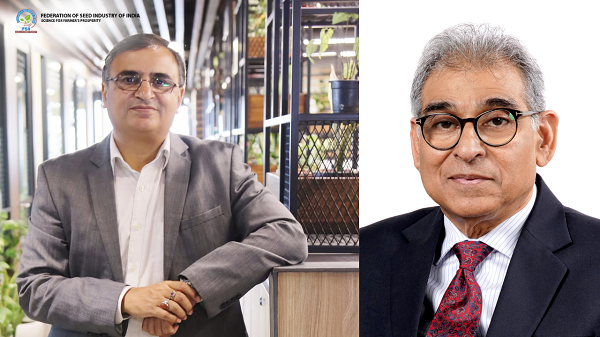 |
Ajai Rana, Chairman, Federation of Seed Industry of India & MD & CEO, Savannah Seeds (left) and Dr Paresh Verma, Director General, Federation of Seed Industry of India
Ajai Rana, Chairman, FSII and CEO & MD, Savannah Seeds, said, “The world is increasingly realising that biodiversity is no longer only an environmental discussion. It is fundamentally linked to economic resilience, food security, and national preparedness. In agriculture, seed diversity acts as an insurance mechanism during periods of disruption, whether arising from climate events, geopolitical tensions, or supply chain shocks.”
He further added, “India’s vast agrobiodiversity is one of our greatest strategic strengths. Our thousands of indigenous crop varieties, region-specific seed systems, and strong scientific ecosystem provide resilience that many countries do not possess. Preserving and strengthening this diversity through innovation, breeding, and science-led agriculture must remain a national priority.”
FSII noted that India remains one of the world’s richest agrobiodiversity regions, with thousands of traditional rice landraces, diverse millet varieties, pulses, oilseeds, and regionally adapted crops that have evolved over generations to withstand varying climatic and ecological conditions. The industry body emphasized that diverse and locally adaptive seed systems become especially important during periods of global uncertainty, helping stabilize productivity and reduce vulnerability to supply disruptions.
Rana also highlighted the increasing role of modern breeding technologies, biotechnology, and genome editing in enhancing agricultural resilience. Recent advancements in climate-resilient, drought-tolerant, flood-tolerant, and nutrient-efficient crop varieties are helping farmers cope with changing climatic conditions while improving productivity and resource-use efficiency. “Between 2014 and 2025, nearly 3,000 climate-resilient crop varieties were developed under national breeding programmes, including drought-tolerant, flood-tolerant, heat-resilient, and nutrient-efficient varieties aimed at improving productivity under stress conditions,” he said.
Dr Paresh Verma, Director General, FSII, said, “The future of agricultural resilience will depend on our ability to combine traditional biodiversity with modern science. Biotechnology, precision breeding, and genome editing are enabling the development of crop varieties that are more resilient to heat, drought, pests, and changing climatic conditions without compromising productivity.”
He emphasized India’s growing seed ecosystem can transform agrobiodiversity into a major strategic and economic advantage. The Federation noted that India currently has over 30,000 registered seed varieties and an estimated domestic seed market of nearly Rs 30,000 crore. With supportive policy reforms, stronger R&D incentives, and regulatory ease, FSII estimates that India could increase its share in global seed exports from nearly 1% currently to 10% by 2035, positioning the country as a major global seed hub.
FSII noted that biodiversity in agriculture should be viewed not only from a conservation perspective, but also as a strategic pillar of economic stability, farmer welfare, and national food resilience. The Federation called for continued support towards seed research, crop improvement, conservation of indigenous germplasm, and policy frameworks that encourage innovation-led and science-based agricultural development.